
Pool Leak Detection in Miami, FL
Miami Pool Repair Pro investigates unexplained pool water loss for homeowners and shared-pool properties in Miami. Testing can include visible equipment checks, fittings, plumbing pressure tests, and other methods suited to the pool. We keep finding the source separate from the repair that may follow.


Get a Free Estimate
Evaporation and unexplained water loss
Frequent refilling is a reason to investigate, not proof of one particular leak. Rain, evaporation, splash-out, filter cleaning, and automatic top-up can change what you see. Record the water level, use, and operating conditions so testing starts with useful information.
A simple screening check before the visit
A rain-free, 24-hour bucket comparison can help screen for unusual loss. With automatic top-up off, mark the water inside a stable bucket and the pool level separately, avoiding splash and disturbance. The comparison does not locate a leak or replace professional diagnosis.
When to arrange professional leak detection
Arrange assessment for persistent or rapid loss, recurring air in the system, or unexplained wet areas. Share water-level notes, equipment photos, and any recent work. Do not drain the pool or keep a pump running dry while waiting for a diagnosis.
How professional leak detection works
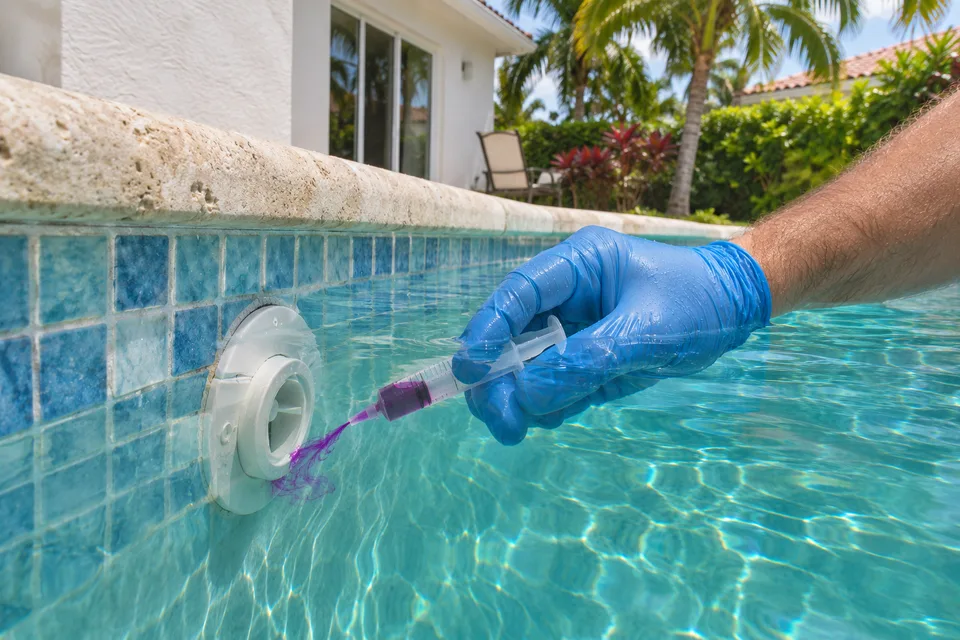
Begin with the reported pattern and a visible inspection. Depending on access and symptoms, testing may include dye at fittings, pressure testing isolated plumbing, and acoustic equipment. The aim is to narrow the location before unnecessary opening of the deck or shell.
Common places a pool can lose water
Water can escape through equipment connections, valves, returns, skimmers, light niches, connected plumbing, or shell concerns. A surface crack does not establish the whole diagnosis. Testing should distinguish an accessible fitting repair from buried-pipe or structural work.
Commercial pool leak detection
Coordinate testing with the pool operator and review make-up water and maintenance records. Automatic refilling can conceal loss, while heavy use can complicate measurements. Plan access, circulation interruptions, and the diagnostic deliverable around the property’s operating requirements.
Detection and repair are separate scopes
The diagnostic scope should explain the testing and findings. Parts, excavation, deck restoration, structural assessment, and corrective work may need a separate estimate. Ask what is included before assuming a leak-detection visit covers every possible repair.
Leak-detection price factors
Pool layout, attached spas, water features, suspected plumbing, and access affect testing scope. Published local detection prices vary with those features. Compare the diagnostic deliverable and any included minor work, then price the identified repair separately.
Helpful sources and planning notes
- Miami-Dade permitting ↗
- City of Miami permit exemptions ↗
- DOH-Miami-Dade public pools ↗
- UF/IFAS pool and hurricane guidance ↗
- Pentair product warranty information ↗
Requirements and product terms depend on the property and exact work. Sources reviewed November 5, 2026.
Pool Leak Detection FAQs
Does frequent refilling prove a leak?
No. Rain, evaporation, use, cleaning, and automatic top-up all affect the level. Persistent unexplained loss deserves a measured assessment.
Does detection include repair?
It depends on the written scope. Confirm whether minor accessible work is included and which repairs, parts, excavation, or restoration would be quoted separately.
Will the whole deck need opening?
Do not assume that before testing. Appropriate pressure, dye, and acoustic methods can help narrow the suspected location before corrective access is planned.
Can rain affect a screening test?
Yes. Rain and splash can distort a comparison. Use a dry, undisturbed period and share the conditions with the technician.
Areas we service
- El Portal
- Miami Shores
- North Miami
- Virginia Gardens
- West Miami
- Coral Gables
- Key Biscayne
- Miami Springs
- Biscayne Park
- North Bay Village
- Opa-locka
- Miami Beach
- South Miami
- Hialeah
- Pinecrest
- Bay Harbor Islands
- Doral
- Surfside
- Indian Creek
- Bal Harbour